- Revenue Alert Newsletter
- Posts
- 3 Lessons Learned From 55,000+ AI Golfer Conversations 🏌️🤖
3 Lessons Learned From 55,000+ AI Golfer Conversations 🏌️🤖
Thousands of real golfer AI conversations surface patterns every operator needs to see to reduce calls, enhance experience, and drive more revenue.

Jake Gordon
March 16, 2026
Hello and welcome to the Revenue Alert newsletter series, presented by Noteefy!
Today’s topic: 3 Lessons Learned From 55,000+ AI Golfer Conversations
As tee time demand keeps climbing, the phone volume hitting pro shops has become one of the biggest operational headaches in the business. And it has a real cost. The National Golf Foundation estimates inbound calls cost course operators over $100 million a year across the country's roughly 16,000 courses.
Golf facilities are hemorrhaging resources on avoidable, often trivial phone calls, diverting staff from higher-value touch points and revenue-generating activities.
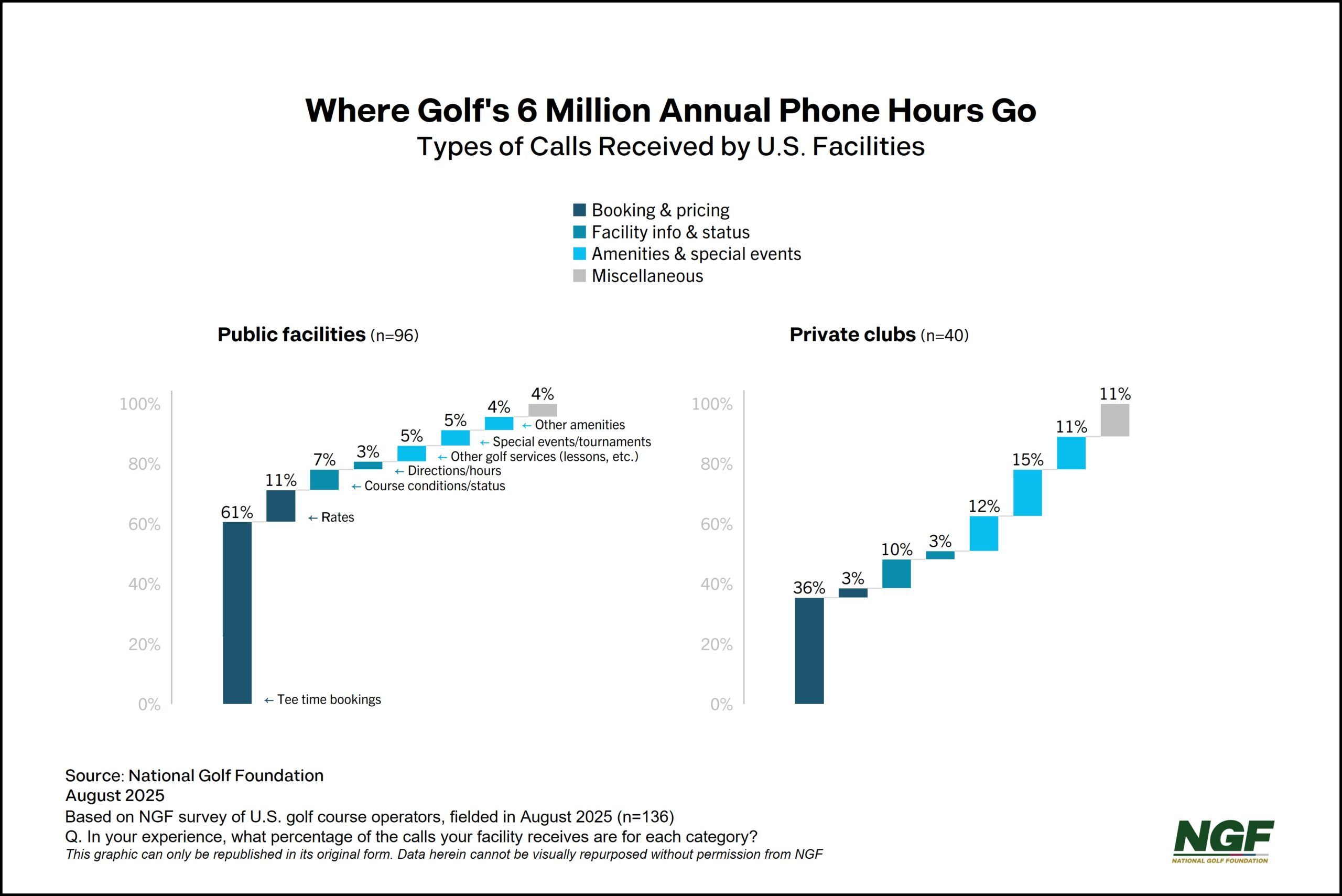
Over the past nine months, Noteefy's AI assistant handled more than 55,000 of these conversations across hundreds of courses. Not surveys or focus groups. Real, in-the-moment interactions where golfers asked the questions they would have otherwise called the pro shop about.
Here are the 3 takeaways and lessons learned for golf course operators:
Takeaway #1: A poor online booking experience is the biggest revenue leak
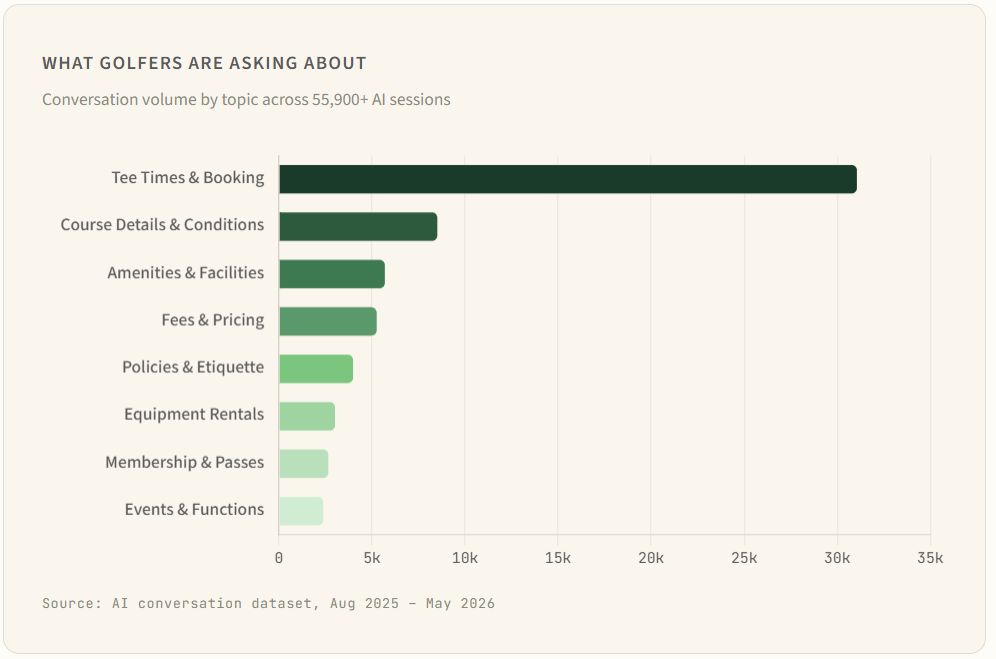
Tee time and booking questions accounted for 31,055 of the 55,900+ conversations — more than the next four categories combined. When you add in fees and pricing (5,254), over half of all golfer inquiries are about one thing: can I play, and what does it cost?
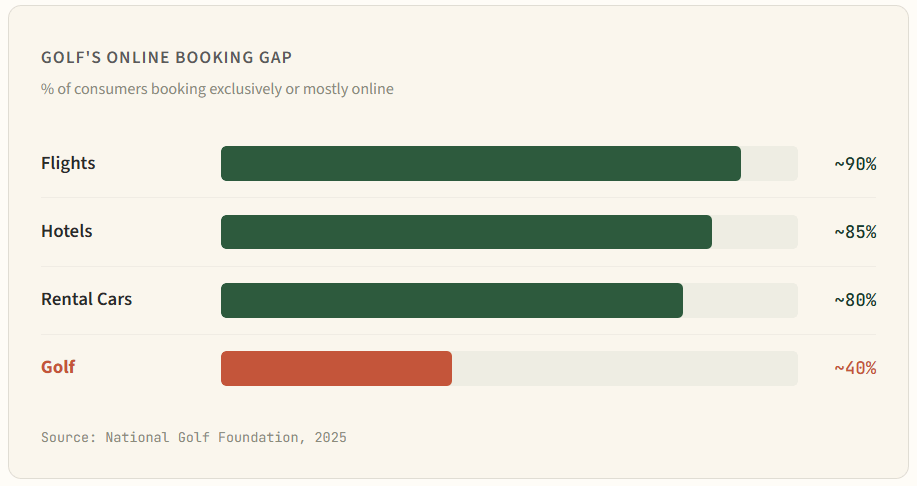
Meanwhile, NGF research shows only about 40% of golfers book tee times mostly online — compared to 80–90% for flights, hotels, and rental cars. That's not because golfers are behind. It's because most course websites haven't given them a reason to stop calling.
What Operators Can Do About This: Count the clicks from your homepage to a confirmed tee time. If it's more than three — or if your booking engine can’t help guests when there aren’t available times— you're losing rounds to friction, not to competitors.
Takeaway #2: The morning phone rush is preventable by frequently communicating course details and conditions
The second-largest category was Course Details & Conditions at 8,509 conversations — questions like "Is it cart path only?" and "Are the greens punched?" These aren't revenue calls. They're pure informational friction hitting your staff during the busiest window of the day.
Add in amenities (5,689), policies (3,981), and equipment rentals (3,012), and roughly a third of all conversations are about information that could be proactively pushed to golfers before they ever think to call.
At the NGF's estimate of ~50 calls per day averaging five minutes each, a typical course burns 4+ staff hours on the phone daily. One course in the dataset hit a 98.6% resolution rate without a single phone call — 2,657 of 2,695 AI conversations fully handled.
What Operators Can Do About This: Start simple: push a daily conditions update to your website, social channels, and that day's booked players every morning. That one habit eliminates the single highest-volume non-revenue call category in the data.
Takeaway #3: AI can help convert more sales of group packages, weddings / events and memberships- especially after hours.
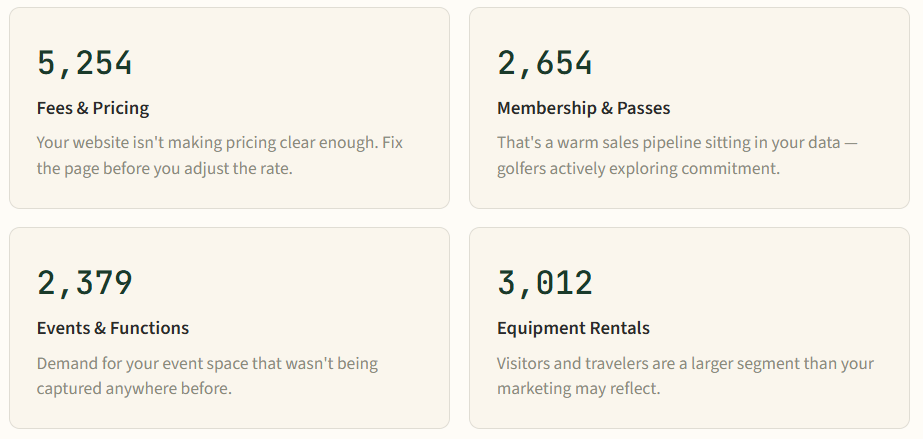
The most interesting revenue signal in the data isn't at the top of the funnel. It's buried further down.
Across 55,900+ conversations, 2,379 were about events and functions, 2,654 about membership, and 5,254 about fees and pricing. None of this is casual browsing. A golfer asking about event space, group outing rates, or wedding availability is a lead. And most of these inquiries come in after hours.
Event and wedding research follows the planner's schedule, not yours. A couple browsing venues at 9pm. A corporate admin pricing outings on a Tuesday night. Industry data from the wedding venue space shows the peak inquiry window is 6–9pm, and responding within one minute lifts conversion by 391%. When the average venue only converts 5–10% of leads into bookings, the courses that answer fastest after the front desk closes win disproportionately.
The pricing conversations tell a similar story. Over 5,200 golfers asked about fees, not because they couldn't find a rate card, but because they had specific questions about what they'd actually pay. Time of day. Weekend vs. weekday. Cart included. Twilight rates. Group discounts. That's real-time demand signaling that tells you which slots are price-sensitive and where you have room to capture more per round.
Courses using dynamic pricing tools report average revenue lifts around 15%, and 80% of a typical course's revenue flows through the tee sheet. Under a phone-only model, every one of these conversations either went to voicemail or evaporated the moment staff hung up.
The high-ROI move: Audit how your course handles inquiries after 5pm. If the answer is voicemail or a contact form that sits until Monday, your highest-value leads are going to the course that responds first.
The thread connecting all three: Golfers and event planners are more digitally active than ever, but most courses haven't built the infrastructure to meet them there. The operators who close that gap first don't just save on labor. They capture demand that was previously invisible, price smarter, and build a loyalty advantage that compounds every month.
Reply